

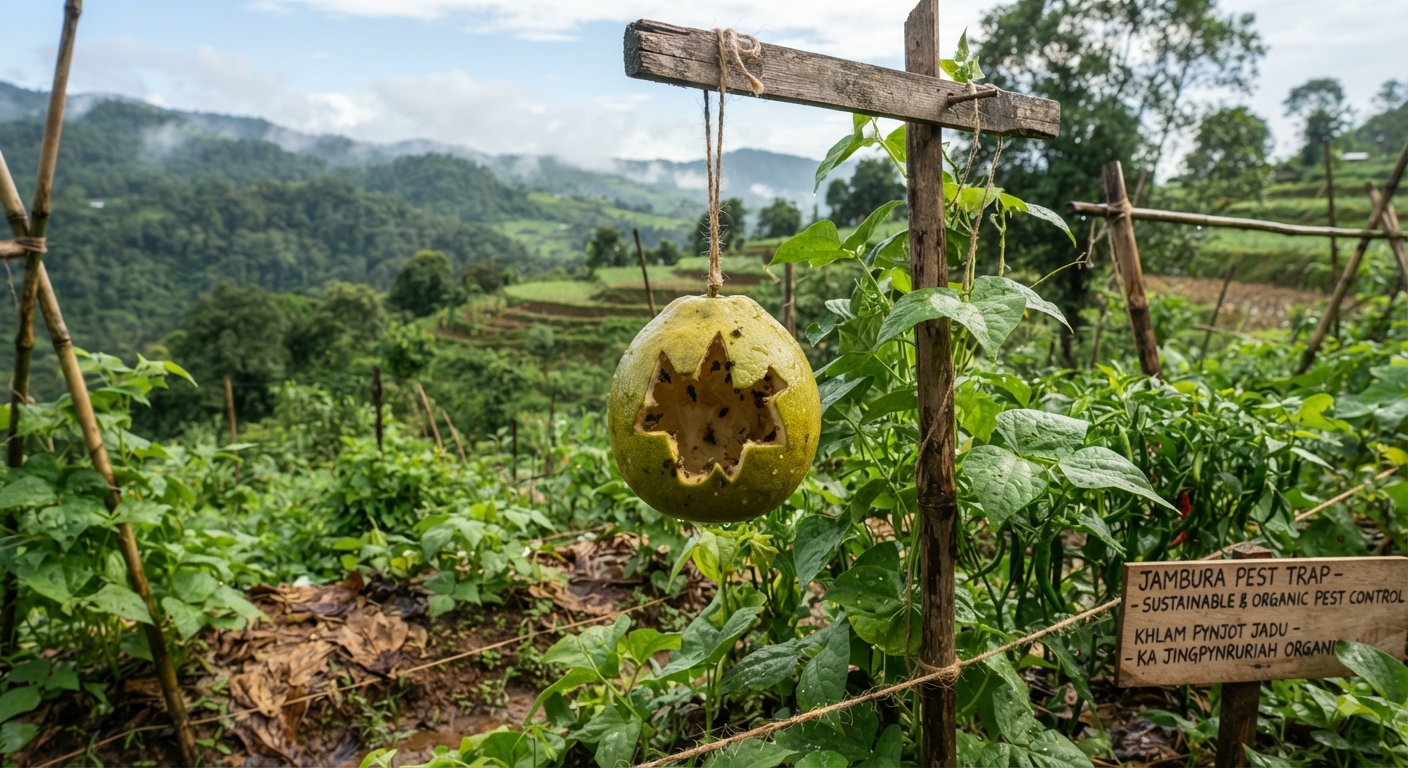
Jambura: Meghalaya’s Ancient Pest Shield
Introduction
Deep in the lush, mist-covered hills of Meghalaya, farming is not just an occupation; it is a harmonious dialogue with nature. As global food supply chains face tightening regulations on chemical residues, corporate agribusinesses and food processing companies must find scalable, ecological alternatives to synthetic pesticides.
The hills of Northeast India offer a proven blueprint. For centuries, indigenous farming communities like the Garos and Khasis in Meghalaya have relied on ancestral wisdom to protect their crops have utilized Jambura (Citrus maxima, or pummelo) as a highly effective crop protection tool.
By analyzing this ancestral practice through a modern agronomic lens, food enterprises can unlock new pathways for corporate sustainability, risk mitigation, and premium organic sourcing.
Long before chemical pesticides existed, this giant citrus fruit Jambura, was, and still is, used as a powerful, eco-friendly shield against agricultural pests.
Here is a look at how this ancient practice works, why it is a masterclass in sustainability, and how it can be seamlessly blended into modern organic farming.
A Centuries-Old Tradition of Natural Defence
The use of Jambura for pest management is an indigenous innovation passed down through generations. Rather than trying to eradicate insects with harsh toxins, traditional tribal farmers utilize the natural properties of the plant to manage pest populations.
The Science Behind the Tradition
Traditional tribal farmers deploy Jambura using two distinct biological mechanisms:
- Volatile Organic Compounds (VOCs) as Repellents: Jambura leaves are rich in bioactive essential oils (including d-limonene, myrcene, and alpha-pinene). When crushed or planted strategically, these leaves release strong VOCs that act as a natural deterrent, disrupting the sensory mechanisms of invading insects.
- Microbial Fermentation Traps: Decomposing pieces of the thick, carbohydrate-rich Jambura fruit are placed along field borders. The resulting microbial fermentation emits an olfactory signal that acts as a powerful attractant, drawing pests away from the primary cash crops into localized traps.
Why Jambura is a Masterclass in Sustainability
At a time when global agriculture is grappling with the toxic after-effects of chemical run-off, Meghalaya’s traditional use of Jambura offers a blueprint for true sustainability.
- Zero Chemical Footprint: Unlike synthetic pesticides, Jambura leaves no chemical residue in the soil or groundwater.
- Preserves Biodiversity: It targets or diverts specific field pests without wiping out beneficial pollinators like bees or butterflies.
- Circular and Cost-Free: Farmers utilize a fruit that grows abundantly in their own backyards, turning a hyper-local resource into an agricultural asset with zero financial cost.
Blending Ancestral Wisdom with Modern Organic Farming
To future-proof our food systems, we do not need to choose between ancient traditions and modern science. Instead, we can blend them.
Integrating Jambura into contemporary organic agriculture can be achieved through three highly effective methods:
-
Formulating Eco-Friendly Botanical Sprays
Modern organic farmers can extract the essential oils from Jambura leaves through simple distillation or water-soaking methods. This liquid can then be emulsified with a small amount of soap nut (ritha) or neem oil to create a standardized, shelf-stable botanical spray for larger-scale organic farms.
-
Standardized Trap Cropping and Bait Stations
Instead of haphazardly placing fruit pieces, modern farms can design engineered “lure-and-kill” or “lure-and-contain” stations using fermented Jambura pulp. Placing these systematically along the perimeter of high-value organic crops creates a highly efficient, data-driven barrier.
-
Agroforestry Integration
Modern organic plantations can strategically plant Jambura trees as bio-shields or boundary markers. This practice—known as agroforestry—not only provides a natural, standing pest deterrent but also adds a secondary source of income through fruit harvesting, while simultaneously preventing soil erosion on hilly terrains.
The Way Forward
Meghalaya’s Jambura pest control method is a powerful reminder that the answers to tomorrow’s ecological challenges often lie in our past. By validating these ancient tribal practices with modern agronomic research, we can scale up sustainable farming solutions that protect both our food security and our planet.
No Comments